

Atlas Coffee Club Alternatives: 2026 Guide
Table of Contents
- Why Coffee Drinkers Switch From Atlas Coffee Club
- Atlas Coffee Club vs Trade Coffee: What Sets Them Apart
- Bean Box vs Atlas Coffee Club: Personalization and Control
- Coffee Subscriptions With Customizable Selections: Your Options
- Coffee Subscription Delivery Frequency: Finding Your Rhythm
- Freshness, Quality, and Total Cost Comparison
- Frequently Asked Questions
Last Updated: October 19, 2026
Why Coffee Drinkers Switch From Atlas Coffee Club
People leave coffee subscriptions because they're not getting what they paid for: the coffee doesn't match their taste, the schedule feels rigid, or they're overpaying for something they could find elsewhere.
The shift away from Atlas Coffee Club happens when subscribers find more control and better value elsewhere: deeper personalization, more delivery flexibility, or specialty coffee without the premium pricing.
The good news: solid alternatives exist. Some excel at discovery, others prioritize control, and a few nail the balance between convenience and value. Below, we'll walk you through the atlas coffee club alternatives that actually deliver, so you can find the right fit for your brewing habits.
Atlas Coffee Club vs Trade Coffee: What Sets Them Apart
Trade Coffee and Atlas Coffee Club sit at opposite ends of the subscription spectrum. Trade is a personalization engine: take a taste quiz, set roast and origin preferences, and get matched to beans from independent roasters. Atlas runs curated discovery: it selects a rotating international coffee for you, and your levers are grind format and delivery cadence, not bean-by-bean choice.
The practical gap is control. Trade lets you adjust roast, origin, and intensity, skip shipments, and change frequency from your account. With Atlas you accept the curator's pick or cancel. That's fine for explorers who want a surprise, but it frustrates drinkers who've mapped their palate and don't want a heavy South American blend when they asked for a bright African coffee.
Pricing is where the two diverge in ways marketing pages rarely spell out. Both sit in the specialty range, but value depends on bag size and servings per shipment, not the headline monthly number. A 12 oz bag at a monthly cadence often works out to roughly a dollar or more per brewed cup with shipping.
Personalization mechanics differ too. Trade's quiz-driven matching is only as good as the feedback loop: rate coffees and update your profile, and recommendations improve; never rate, and you get generic matches. Atlas's curation is only as good as your tolerance for variety: if you enjoy tasting across origins, the lack of choice is a feature, not a bug.
For drinkers who know their preferences and want to steer the selection, Trade is the stronger fit. To test your palate before committing to either model, a sample pack is the lower-risk move: Roastica's Single Origin Favorites Sample Pack lets you taste six origins side by side so you can decide whether you are a discovery drinker or a control drinker before you pay for a subscription.

Bean Box vs Atlas Coffee Club: Personalization and Control
Bean Box and Atlas Coffee Club both sell discovery, but through different mechanisms. Bean Box gives direct selection: browse a curated roster each cycle and pick what you want, with control over grind size, bag size, and pausing deliveries.
That difference sounds small until you map it to how people actually drink coffee. A subscriber who loves bright, fruity African coffees shouldn't be forced into a heavy South American blend because that's what the curator chose this month. Bean Box's pick-your-own model avoids that mismatch; Atlas's model accepts it as the cost of discovery. If you enjoy surprises and have a broad palate, Atlas is efficient.
The control gap extends to logistics. Bean Box lets you adjust grind size and bag size and pause deliveries without penalty, and changes don't require an email to support. Atlas offers less flexibility on the bean side, so the practical test is simple: can you change what arrives, or only when it arrives? If only when, you're buying curation, not personalization.
Cost is the other axis. Both sit in the specialty range, but the true comparison is per-cup, not per-bag. Take the delivered price of a shipment, divide by the cups the bag yields at your brew ratio, and compare that number across services.
For subscribers who value control, Bean Box delivers. For those who want to be surprised, Atlas's curation still appeals. If you're unsure which camp you're in, test it cheaply: Roastica's Best Sellers Sample Pack gives you six coffees across roast levels and flavor profiles, so you can confirm whether you want to pick your own beans or let a curator decide, without committing to a subscription.

Coffee Subscriptions With Customizable Selections: Your Options
The market has shifted toward customization. Subscribers increasingly expect to influence what arrives at their door. Here's what that means in practice.
Single-Origin Discovery vs Blended Variety
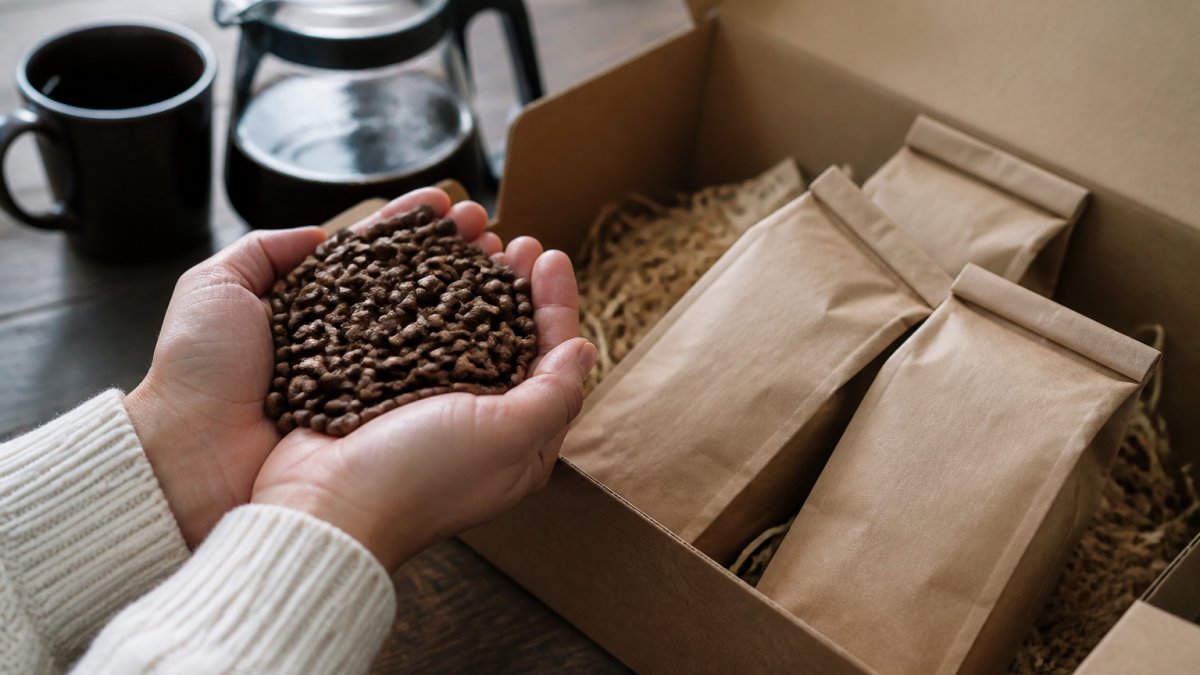
Single-origin coffees come from one specific farm or region, showcasing distinct flavor profiles tied to geography, altitude, and farming practices. An Ethiopian Sidama tastes different from a Colombian Huila because of where the beans grow and how they're processed.
Blended coffees combine beans from multiple origins for consistency and balance. A breakfast blend might mix Brazilian and Central American beans for a smooth, forgiving cup.
The choice depends on what you're exploring. Single-origin coffees reward attention. You taste the terroir. You notice how roast level changes the flavor profile. If you enjoy tasting notes and experimenting, single-origin subscriptions make sense.
Blended coffees work better for daily drinking: more forgiving if your brewing technique isn't perfect, and consistent month to month. If you just want good coffee without analysis, blends deliver.
Many subscriptions offer both. Roastica's Single Origin Favorites Sample Pack lets you try six origins in 2oz sizes: Brazil Santos with cocoa, Colombia with dried orange and berry, Costa Rica with apple and honey, Ethiopia with chocolate and fruit, Honduras with caramel and spice, and Tanzania with pear and floral notes. That's real diversity in a single order.
The practical advantage of sample packs is cost. You're paying for exploration without committing to full-size bags of something you might not like.
Roast Level and Flavor Profile Matching
Roast level changes everything. Light roasts preserve origin characteristics, with natural acidity and brightness. Medium roasts add balance. Dark roasts bring boldness and body.
Most specialty coffee subscriptions let you specify roast preference. Some go further and ask about flavor profile: fruity, floral, chocolatey, or nutty notes? That helps curators match you with beans you'll actually enjoy.
Single Origin Favorites Sample Pack →
The matching process varies. Some services use questionnaires, others let you browse and pick, and a few combine both: they ask your preferences but let you override their recommendations.
What matters is that the system accounts for your actual taste. Someone who loves dark roasts shouldn't get light roasts because the service thinks they should "try something new." That's not personalization. That's ignoring feedback.
Roastica's Best Sellers Sample Pack includes a range. The 6Bean Blend is a dark roast for espresso. The Cowboy Blend mixes dark and medium for cocoa, caramel, and vanilla. The Breakfast Blend is medium for smoothness. Peru offers medium roast with salted caramel and citrus. Mexico brings medium roast with chocolate and cinnamon. Bali is medium-dark with dark chocolate and molasses. You get roast variety and flavor diversity without committing to a full subscription.
Coffee Subscription Delivery Frequency: Finding Your Rhythm
Delivery frequency is where flexibility matters most. Life isn't predictable: coffee consumption changes with seasons, travel, and work schedules.
The best atlas coffee club alternatives let you adjust frequency without friction. Skip a month if you're traveling. Pause if you've built up a stockpile. Resume when you're ready.
Many subscriptions default to monthly delivery. Some offer bi-weekly options for heavy drinkers. A few let you customize down to the week.
The real test is how easy it is to change. Can you adjust frequency from your dashboard, or do you need to email support? Does pausing cost extra? Will they charge you if you forget to skip?
Services that make changes difficult are betting inertia keeps you subscribed. That's not sustainable; it's a sign the service doesn't trust its product enough to keep you as a willing customer.
You control the rhythm, which works for people who want premium coffee without the subscription obligation.
Freshness, Quality, and Total Cost Comparison
Freshness is non-negotiable for specialty coffee. Beans start losing flavor the moment they're roasted, so look for roast dates within the last two weeks.
Quality varies by sourcing. Single-origin beans from specific farms cost more than commodity blends, but you're paying for traceability and flavor, not just novelty.
The total cost comparison is where things get interesting. A monthly subscription might cost $40 to $60 depending on bag size and frequency, $480 to $720 a year.
The catch: you're locked in. If you don't like the selections, travel for two weeks, or want to switch services, you're still paying, and there's friction.
One-time purchases eliminate this problem: pay for what you order, try different roasters, find what you like, then order again.
Roastica's single-origin coffees run 24.99 per bag. Try Uganda at 24.99; if you love it, order again. Prefer Peru? Switch.
Sample packs offer even better value for exploration: both the Single Origin Favorites and Best Sellers packs are 24.99 for six 2oz samples, about 4.17 per sample, so you taste six coffees before committing to full-size bags.
| Subscription Model | Monthly Cost | Annual Cost | Flexibility | Commitment |
|---|---|---|---|---|
| Traditional Subscription | $45-60 | $540-720 | Low | 12 months |
| Flexible Subscription | $45-60 | $540-720 | Medium | Month-to-month |
| One-Time Purchases | $24.99+ | Variable | High | None |
| Sample Packs | $24.99 | Variable | High | None |
The best model depends on your habits. If you like exploring or your consumption varies, one-time purchases and sample packs give you control.
If you've outgrown generic coffee subscriptions, you need a service that respects your preferences and doesn't force you into long-term commitments. Roastica delivers freshly roasted, responsibly-sourced beans roasted to order, so you get maximum flavor and aroma without the subscription obligation. Start with the Single Origin Favorites Sample Pack to explore six different origins, or try the Best Sellers Sample Pack for a range of roast levels and flavor profiles. You control what you order, when you order it, and whether you come back.
Frequently Asked Questions
What are the best alternatives to Atlas Coffee Club?
The best alternatives depend on what matters most to you. If you want maximum customization and control over your selections, look for coffee subscriptions that let you choose your own beans and roast levels. If you prioritize freshness and ethical sourcing, prioritize services that roast to order and provide transparent grower information. Roastica offers single-origin coffees roasted to order, with options ranging from light Ethiopian naturals to dark-roasted blends, giving you both discovery and control.
Can you pause or skip deliveries with coffee subscription services?
Flexibility varies by service. Many premium coffee subscriptions allow you to pause, skip, or adjust delivery frequency without penalty. Before committing, confirm the service's cancellation and skip policies. This matters especially for busy professionals whose schedules change or for anyone worried about beans going stale. Check whether the service charges fees for pausing or requires minimum commitments.
How long does specialty coffee stay fresh after delivery?
Whole-bean coffee stays fresh for 2-4 weeks after roasting when stored in an airtight container away from light and heat. Ground coffee loses freshness faster, typically within 1-2 weeks. Services that roast to order, like Roastica, ship beans closer to roast date, maximizing the freshness window in your home. Always check the roast date on your bag and store beans in an opaque, sealed container.
What makes specialty coffee subscriptions worth the price versus grocery store options?
Specialty coffee subscriptions focus on single-origin beans from specific farms and regions, offering distinct tasting notes like citrus, chocolate, or floral notes that grocery store blends lack. They're roasted fresh to order for peak flavor and aroma. You also get transparency about grower practices and sourcing ethics. The difference in cup quality is noticeable, especially if you brew with pour-over, espresso, or drip methods that highlight the beans' characteristics.