

Best Coffee Beans for Home Brewing: 2026 Guide
Table of Contents
- How to Choose the Best Coffee Beans for Home Brewing
- Quick Comparison: Roastica Beans by Brew Method
- Best Coffee Beans for Pour Over
- Best Espresso Beans for Milk Drinks and Shots
- Best Coffee Beans for Cold Brew
- Coffee Grind Size for Brewing: Match Beans to Your Equipment
- How We Evaluated These Beans
- Conclusion
- Frequently Asked Questions
Last Updated: October 16, 2026
How to Choose the Best Coffee Beans for Home Brewing
Finding the best coffee beans for home brewing comes down to three things: roast level, freshness, and how the bean matches your equipment. Most supermarket coffee fails on at least two.
This guide from Roastica walks through a practical selection framework for home brewing, then compares beans by brew method. The pattern: freshness beats brand, and match beats price.
Coffee beans are the roasted seeds of the Coffea plant, graded by origin, variety, processing method, and roast level before they reach your kitchen. According to the Specialty Coffee Association's green coffee guidance, origin and processing shape flavor long before roasting begins.
Most buying guides rank beans by reputation instead of brew method.
A Method-Neutral Selection Framework for Beginners
Most guides sort beans by brew method first, which leaves beginners guessing.
Step 1: Pick a roast level. Roast level is the biggest lever you control.
Step 2: Name your flavor preference. Bright and fruity, or smooth and chocolatey?
Step 3: Match to your equipment. Your brewer dictates grind size, contact time, and how much acidity survives.
Step 4: Adjust for experience. Beginners should favor medium roasts and forgiving origins like Colombia or Brazil.
How Bean Choice Changes With Your Equipment
The same bean behaves differently depending on how you brew it, that is extraction mechanics. Espresso forces water through fine grounds at high pressure in under 30 seconds, amplifying sweetness and harshness.
That is why a bean that tastes flat in one brewer can taste excellent in another. If you own more than one brewer, buy medium roasts with balanced acidity and body, good in all methods, best in none.
A Quick Buying Checklist
Before you add a bag to your cart, run through this list:
- Does the bag show a roast date, not just a best-by date?
- Is the roast level stated clearly, not hidden behind a marketing name?
- Does the flavor description match what you actually enjoy drinking?
- Does the bean's roast level fit your main brewer?
- Can you finish the bag in two to four weeks?
If you can answer yes to all five, you are ahead of most home brewers. If not, the problem is usually the bag, not your technique.
Freshness, Roast Date, and Buying Quantities
Freshness is the biggest quality gap between specialty beans and grocery store bags. Coffee stales fast once roasted, and most supermarket bags carry a "best by" date instead of a roast date. Buy in quantities you can finish in two to four weeks, whole beans over ground, stored in an airtight container away from light and heat, skip the fridge.
How Much Should You Spend?
You do not need to spend the most to drink well. Compare beans by cost per cup, not cost per bag. A 12-ounce bag at a moderate price often lands between $0.75 and $1.25 per cup; a premium single origin can push past $2. For drip and batch brewing, a solid medium roast at a moderate price is often the better value.

How We Test and Evaluate Beans
Recommendations are only useful if you know how they were made. Here is our method.
Equipment. We use a burr grinder, a scale accurate to 0.1 grams, a gooseneck kettle, and a calibrated espresso machine.
Repeatability. If a bean scores well once, we brew it again before recommending it. A single good cup can be luck.
This is the difference between a recommendation and a storefront listing. A listing tells you what a bean is.
Quick Comparison: Roastica Beans by Brew Method
Every Roastica batch is roasted to order, so the bag arrives close to its roast date. Here is how our range maps to common home brewing setups.
| Bean | Roast Level | Tasting Profile | Best Brew Method |
|---|---|---|---|
| Ethiopia Natural | Medium-light | Milk chocolate, fruity, caramel | Pour-over, cold brew |
| Colombia | Medium | Dried orange, berry, chocolate | Pour-over, drip |
| Brazil Santos | Medium | Smooth, cocoa | Espresso, drip |
| Breakfast Blend | Medium | Smooth South American blend | Drip, batch brewing |
| French Roast | Dark | Bold, roasty | Espresso, milk drinks |
| Sumatra | Dark | Earthy, dark chocolate, syrupy | Cold brew, French press |
All ten Roastica coffees are priced at $24.99, whether you choose a single origin or a sample pack.

Best Coffee Beans for Pour Over
The best coffee beans for pour over are medium to medium-light roasts with clear acidity and fruit notes. Ethiopia Natural fits exactly: medium-light roast, milk chocolate and caramel, grown by smallholder farmers in the Sidama zone at 1,700 to 1,900 metres.

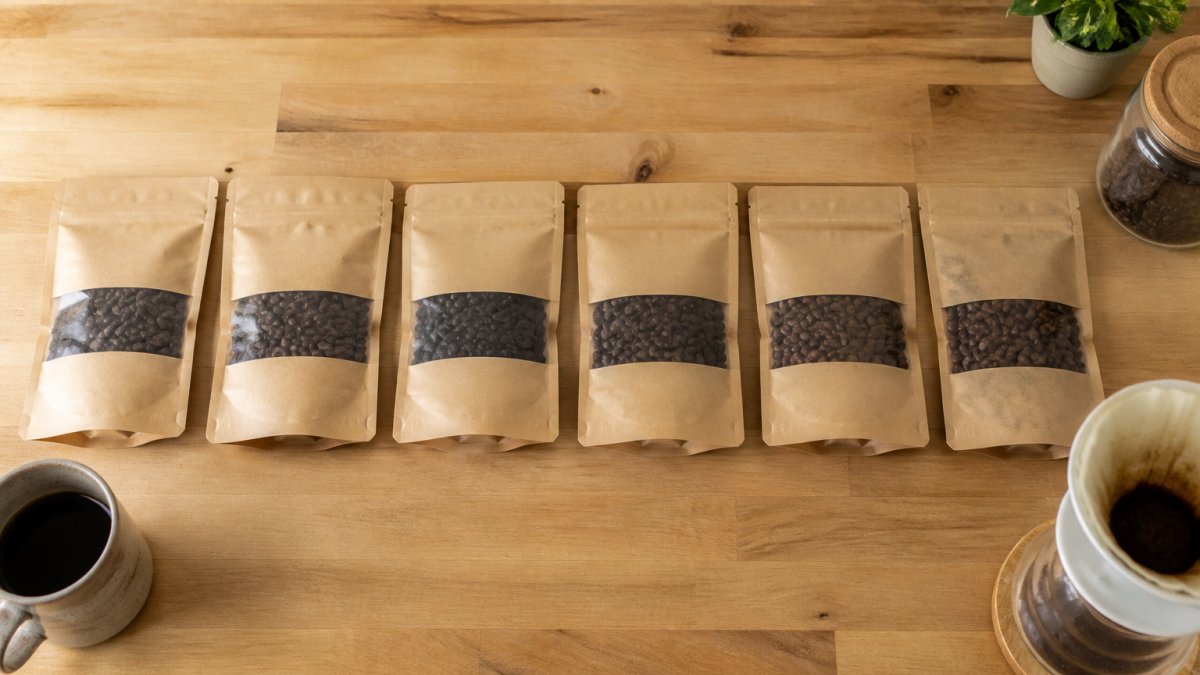
If you are new to pour-over, start with a sample. The Single Origin Favorites Sample Pack gives you six 2oz bags, including Ethiopia, Colombia, Costa Rica, and Tanzania, for $24.99, the fastest way to find your preferred flavor profile without committing to full bags.
Best Espresso Beans for Milk Drinks and Shots
The best espresso beans are medium-dark to dark roasts with low acidity and enough body to cut through milk. French Roast, our dark roast blend of specialty grade Central American coffee, holds up in a flat white or cappuccino.
Brazil Santos works for straight shots: its smooth, cocoa-forward cup pulls a balanced espresso without the sharpness some single origins show under pressure. The 6Bean Blend in the Best Sellers Sample Pack is built for espresso, making the sample pack a sensible first order if you are dialing in a new machine.
Single Origin Favorites Sample Pack →
Specialty Coffee Association's brewing standards note that grind consistency affects extraction more than bean choice alone. For espresso, that means a burr grinder is not optional.
Best Coffee Beans for Cold Brew
The best coffee beans for cold brew are medium to dark roasts with low acidity and heavy body. Cold water extracts slowly, so chocolate and caramel dominate while bright acidity fades.
Sumatra is the standout: its syrupy body, dark chocolate, and dried fruit notes were practically made for a 12-hour steep.
Use a coarse grind, roughly the texture of raw sugar, and a 1:8 coffee-to-water ratio for concentrate. Dilute to taste with water or milk.
Coffee Grind Size for Brewing: Match Beans to Your Equipment
Coffee grind size for brewing is the variable most home baristas ignore, and it changes extraction more than switching beans does. Match grind to method and your existing beans will taste noticeably better.
- Espresso: fine, like powdered sugar
- Pour-over: medium-fine, like table salt
- Drip coffee maker: medium, like sand
- French press: coarse, like breadcrumbs
- Cold brew: extra coarse, like raw sugar
A common mistake is buying a blade grinder and wondering why the cup tastes uneven. Blade grinders produce mixed particle sizes, so some grounds over-extract and others under-extract in the same brew. A burr grinder fixes this.
How We Evaluated These Beans
Most buying guides tell you which beans to buy, but few tell you how they decided. Below is the exact method behind every recommendation here, so you can judge the advice instead of trusting it blindly.
Our Testing Method
Equipment held constant. We use a burr grinder, a scale accurate to 0.1 grams, a gooseneck kettle, and a calibrated espresso machine.
Tasting criteria. Each bean is scored on sweetness, acidity, body, and clarity, tasted at least twice on different days to reduce palate fatigue and day-to-day brewing variance.
Repeatability. If a bean scores well once, we brew it again before recommending it. A single good cup can be luck.
Evaluation Criteria in Detail
Roast consistency. We check whether the roast level on the bag matches what is in the cup.
Freshness at delivery. We note the roast date on arrival and brew within the first two weeks.
Performance across brew methods. A bean that only works in one brewer is a narrow recommendation.
Sourcing transparency. Every bean listing includes the grower, region, altitude, variety, and processing method, letting you trace the cup back to the farm and understand why it tastes the way it does.
How to Read Our Recommendations
When we say a bean is best for pour-over, we mean we brewed it as pour-over and it scored well on clarity and acidity. When we say it works for espresso, we mean it pulled a balanced shot without harshness.
That distinction matters: a versatile bean is a safe first purchase, while a method-specific bean is better once you know your brewer.
What We Do Not Claim
No single bean wins for every method. A dark roast that makes a superb espresso tastes flat in a pour-over; a bright light roast that shines in a pour-over can taste thin and sour as espresso. Match first, then upgrade.
Roastica roasts to order, so bags ship close to the roast date rather than sitting in a warehouse. The sample packs let you test six coffees for $24.99 before committing to a full bag, the fastest way to run your own version of this test at home.
Conclusion
The hardest part of home brewing is not technique. It is buying beans fresh enough and matched closely enough to your equipment to taste the difference.
Roastica solves that by roasting to order, sourcing responsibly from trusted farms, and delivering straight to your door. Start with a sample pack to find your profile, then order full bags of the beans that fit your method.
Frequently Asked Questions
Which are the best coffee beans to use for home brewing?
The best beans depend on your brew method and taste preference. Medium roasts like Brazil Santos or Colombia work well across most home brewing setups because they balance sweetness and acidity. For pour-over, try a medium-light Ethiopia Natural for fruit and floral notes. For espresso, a dark roast like French Roast delivers bold, roasty flavor that cuts through milk. For cold brew, medium-dark options like Sumatra or Bali give syrupy body and low acidity. Always check the roast date and buy whole beans for the freshest cup.
What is the best grind for coffee beans?
Grind size should match your brewing equipment. Pour-over and drip coffee makers need a medium grind, similar to table salt. Espresso requires a fine grind, like powdered sugar. Cold brew needs a coarse grind, closer to sea salt, because steeping happens over 12 to 18 hours. If your coffee tastes bitter, grind coarser. If it tastes sour or weak, grind finer. A burr grinder gives the most consistent results for home brewing.
Are light or dark roast beans better for home brewing?
Neither is universally better. Light and medium-light roasts preserve more origin character, so you taste fruit, floral, and caramel notes. They suit pour-over and drip methods. Dark roasts taste bolder and roastier, with less acidity, and work well for espresso and cold brew. Medium roasts sit in the middle and are the most versatile for beginners. Try a sample pack with several roast levels to find what you enjoy before committing to a full bag.
How fresh should coffee beans be for home brewing?
Use beans within two to four weeks of the roast date for the best flavor. Whole beans stay fresh longer than ground coffee because less surface area is exposed to air. Store them in an airtight container away from light, heat, and moisture. Avoid buying more than a two-week supply at once unless you freeze the excess. Roastica roasts to order, so beans arrive close to their roast date and peak flavor window.
What type of coffee machine do you need for coffee beans?
You do not need an expensive machine to brew whole beans well. A pour-over dripper, French press, or standard drip coffee maker all work with freshly ground beans. Espresso machines require a fine grind and consistent tamping, so they suit home baristas who want to dial in shots. Cold brew needs only a jar and a filter. Start with the equipment you already own, then match your grind size and bean choice to that method.