

Brew Specialty Coffee Without Equipment: A 2026 Guide
Table of Contents
- Why Specialty Coffee Deserves Better Than Standard Brewing Methods
- How to Make Coffee Without a Coffee Maker: Core Methods
- Coffee to Water Ratio for Two Cups: Precision Without a Scale
- Grinding Specialty Coffee Without a Grinder
- Cold Brew Coffee Without Equipment: The Overnight Method
- Brewing Coffee Without a Filter: Separation Techniques
- Water Temperature and Steeping Time for Optimal Extraction
- Selecting Specialty Beans That Shine in No-Equipment Brewing
- Frequently Asked Questions
Last Updated: October 19, 2026
Why Specialty Coffee Deserves Better Than Standard Brewing Methods
Most people assume specialty coffee requires a grinder, French press, or espresso machine. It doesn't.
At Roastica, we've learned that specialty coffee is about the beans, not the gear. With high-quality, freshly roasted single-origin coffee, a jar, a pot, a spoon, and hot water are all you need to brew specialty coffee without equipment.
The difference between mediocre and great coffee comes down to bean quality and extraction. Grocery store coffee sits on shelves for months, losing flavor; specialty coffee, roasted to order, retains what makes it special.
This guide shows you how to make coffee without a coffee maker using tested immersion and pour-over techniques, plus ratios, grinding without a grinder, and water temperature and steeping time.
How to Make Coffee Without a Coffee Maker: Core Methods
There are two main approaches, and both deliver excellent results.
Immersion brewing steeps grounds in hot water, then separates them from the liquid. Pour-over brewing pours hot water through grounds in a cloth or makeshift filter, letting gravity work. Each produces a slightly different flavor profile using items you already own.
Immersion Brewing in a Jar or Pot
The easiest method: steep grounds in hot water, then separate them.
What you need:
- A clean jar, pot, or glass
- Coarse-ground specialty coffee
- Hot water (around 195-205°F)
- A spoon or ladle
- A cloth, fine strainer, or paper towel
Steps:
-
Add cold water to your jar. Use a ratio of 1 part coffee to 16 parts water. For two cups, that's roughly 0.5 ounces of ground coffee to 8 ounces of water.
-
Heat water to just below boiling. You want it hot, not actively bubbling. If you don't have a thermometer, boil water and let it sit for 30 seconds before pouring.
-
Pour the hot water over the grounds slowly. Stir well. Make sure all grounds are wet and submerged.
-
Let it steep for 4-5 minutes. Longer steeping pulls more flavor but also more bitterness; shorter tastes lighter and brighter.
-
Separate the grounds from the liquid. Pour the mixture through a cloth-lined strainer into your cup. Or carefully pour into another jar, leaving the settled grounds at the bottom.
-
Serve immediately. Specialty coffee tastes best fresh, within minutes of brewing.
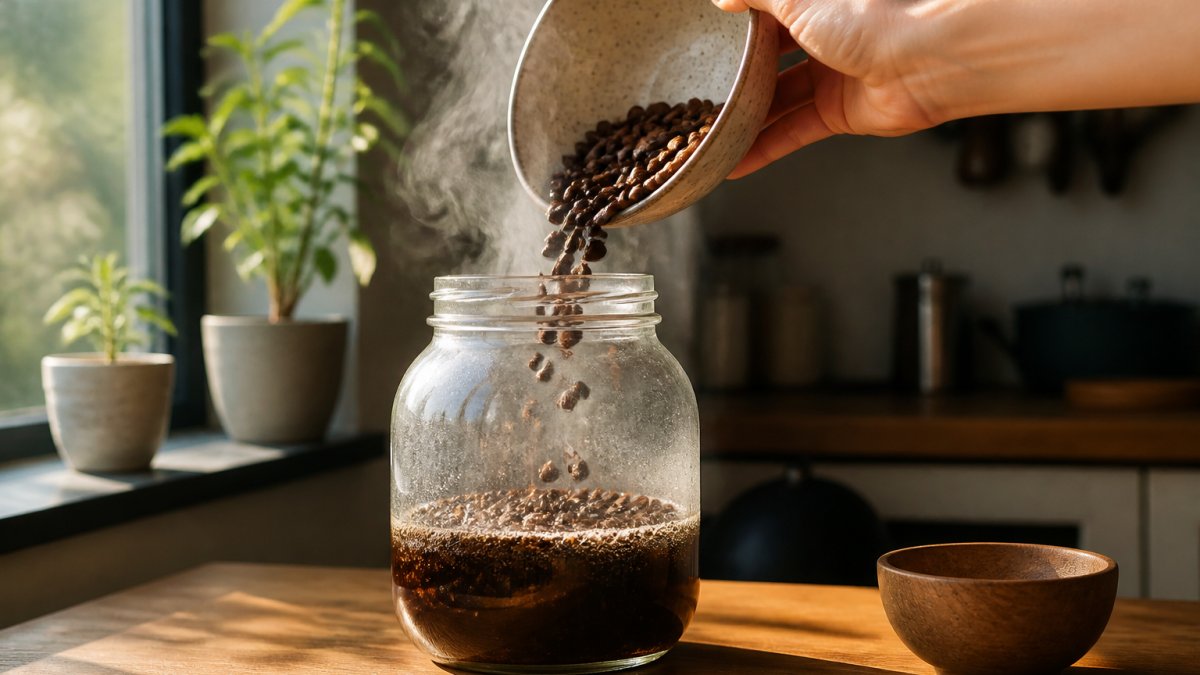
Immersion is forgiving, a few extra seconds of steeping won't ruin the cup, and works especially well with medium and dark roasts.
The Pour-Over Method Using a Cloth or Makeshift Filter
Pour-over gives you more control: water passes through grounds faster, yielding a brighter, lighter cup.
What you need:
- A cloth (coffee filter, cheesecloth, or clean kitchen towel)
- A way to hold the cloth (a rubber band, a small strainer, or a mug rim)
- Medium-ground specialty coffee
- Hot water (195-205°F)
- A cup or pot to catch the brewed coffee
Steps:
-
Secure your cloth filter. Stretch it across the top of your cup or pot with a rubber band or over a strainer rim, tight enough that grounds won't slip through.
-
Rinse the cloth with hot water. This removes lint and prepares the filter.
-
Add ground coffee to the cloth. Use the same 1:16 ratio, about 0.5 ounces for two cups.
-
Pour a small amount of hot water to "bloom" the grounds. Wet them completely. Wait 30 seconds. This releases trapped gases and improves extraction.
-
Pour the remaining hot water slowly over the grounds. Pour in circles, keeping the water level consistent. The total brew time should be 2-3 minutes.
-
When dripping slows, remove the cloth and serve. The coffee should be clear and bright.
Pour-over produces a cleaner cup that highlights the bean's unique characteristics, working beautifully with light and medium roasts.
Coffee to Water Ratio for Two Cups: Precision Without a Scale
Most people eyeball their grounds, which is why their coffee is inconsistent.
The standard ratio for specialty coffee is 1 part coffee to 16 parts water, for immersion and pour-over alike. For two cups (16 ounces of water), you need 0.5 ounces of ground coffee, or about 3.5 tablespoons.
Why this ratio matters: Too little coffee tastes weak; too much tastes bitter. The 1:16 ratio hits the sweet spot for most specialty beans.
| Cups of Water | Coffee Amount | Tablespoons |
|---|---|---|
| 8 oz (1 cup) | 0.25 oz | 1.75 tbsp |
| 16 oz (2 cups) | 0.5 oz | 3.5 tbsp |
| 24 oz (3 cups) | 0.75 oz | 5.25 tbsp |
| 32 oz (4 cups) | 1 oz | 7 tbsp |
Without a scale, use tablespoons: one tablespoon of ground coffee weighs roughly 0.14 ounces, close enough for excellent results.
Adjust the ratio to taste. For stronger coffee, use 1:14; for lighter, 1:18. Always start with 1:16 and adjust from there.
Grinding Specialty Coffee Without a Grinder
Whole beans hold flavor and aroma for weeks; ground coffee starts losing quality within hours.
If you have whole beans but no grinder, you have options, none as fast as a grinder, but all work.
Crushing with a spoon or mortar and pestle: Place beans in a sturdy bag or between two spoons and press hard with a rocking motion.
Crushing in a food processor (if you have one): Pulse in short bursts, 10-15 seconds, rest, then pulse again.
The key: Coarser is better when grinding manually, a coarse grind brews slower, extracting flavor without bitterness.
Cold Brew Coffee Without Equipment: The Overnight Method
Cold brew is the most forgiving method: no temperature control, no precise timing, just patience.
What you need:
- A jar or pot
- Coarse-ground specialty coffee
- Cold water
- A cloth or strainer
Steps:
-
Add coarse-ground coffee to your jar. Use a ratio of 1 part coffee to 8 parts water (cold brew uses less water because extraction takes longer). For 16 ounces of water, use 2 ounces of ground coffee.
-
Pour cold water over the grounds. Stir well so all grounds are submerged.
-
Cover the jar and let it sit at room temperature for 12-24 hours. Start tasting after 12 hours to find your preference.
-
Strain through a cloth or fine strainer. The result is a concentrate, dilute it with water or milk before serving.
-
Store in the fridge for up to 2 weeks. Cold brew concentrate keeps far longer than hot-brewed coffee.
Cold brew tastes smooth and sweet because cold water extracts less bitterness, perfect for bright, fruity specialty beans.
Brewing Coffee Without a Filter: Separation Techniques
You don't need a paper or cloth filter, just a way to separate grounds from liquid.
The spoon method: After steeping, let grounds settle for 1-2 minutes, then slowly pour the clear coffee into another cup, leaving sediment behind.
The cloth strainer: Stretch a clean cloth (coffee filter, cheesecloth, or thin kitchen towel) across a strainer or mug rim and pour through.
The ladle method: Scoop brewed coffee from the top of the jar, avoiding the settled grounds. Slow but effective.
The double-pour method: Pour the coffee into a second jar, then back into the first, leaving sediment behind each time. Repeat until clear.
The cloth method produces the cleanest cup; the spoon method is fastest. Choose speed or clarity.
Water Temperature and Steeping Time for Optimal Extraction
Water temperature and steeping time are the two levers that change how your coffee tastes.
Hot water extracts faster. At 195-205°F, specialty coffee reaches optimal extraction in 4-5 minutes with immersion or 2-3 minutes with pour-over.
Steeping time matters as much as temperature. Longer steeping pulls more flavor and bitterness; shorter tastes brighter but may be weak.
For immersion brewing: Start with 4 minutes at 200°F. If the coffee tastes sour, steep longer next time; if bitter, steep shorter.
For pour-over: Aim for 2-3 minutes total. If water drips through too fast, your grounds are too coarse; too slowly, too fine.
For cold brew: Time matters less at low temperature.
| Brewing Method | Water Temperature | Steeping Time | Grind Size |
|---|---|---|---|
| Immersion | 195-205°F | 4-5 minutes | Coarse |
| Pour-Over | 195-205°F | 2-3 minutes | Medium |
| Cold Brew | Room temp | 12-24 hours | Coarse |
Selecting Specialty Beans That Shine in No-Equipment Brewing
Origin, roast level, and processing method all affect how specialty coffee tastes.
Single-origin coffees come from one farm or region with distinct flavor profiles, a Brazil Santos tastes different from an Ethiopia Sidama.
Roast level matters. Light roasts highlight origin flavors: fruity, floral, bright notes. Medium roasts balance origin flavor with chocolate, caramel, and nuts.
For no-equipment brewing, medium roasts are the safest choice, forgiving and good with any method. Roastica's House Blend is a medium roast designed for smooth, consistent results across all brewing styles.

Light roasts require more precision. They taste best with pour-over; steeped too long in immersion, they can taste sour.
Dark roasts are nearly impossible to over-extract. Their bold flavors mask bitterness and work beautifully with immersion and cold brew.
For specialty beans that work great without equipment, consider:
- Brazil Santos (medium roast): Elegant, smooth, cocoa notes. Forgiving with any method.
- Colombia (medium roast): Dried orange, berry, chocolate. Excellent with immersion brewing.
- Costa Rica (medium roast): Sweet apple, raisin, honey. Bright and clean with pour-over.
- Ethiopia (medium-light roast): Milk chocolate, fruity, caramel. Shines in cold brew.
- Honduras (medium-dark roast): Caramel, spice, brown sugar. Bold and forgiving with immersion.
Roastica's Single Origin Favorites Sample Pack includes six of these varieties in 2-ounce portions, so you can discover which origins and roasts you prefer.

**The real barrier to great coffee isn't equipment.
Roastica delivers responsibly-sourced, roasted-to-order specialty coffee directly to your door. You'll taste the difference that quality beans make, no fancy equipment required. Get started with Roastica and discover how fresh, ethically sourced specialty coffee transforms your daily ritual.
Frequently Asked Questions
Can you brew specialty coffee with just hot water and a cup?
Yes. The simplest method is immersion brewing: add whole beans or coarsely ground coffee to a cup of hot water, steep for 4-5 minutes, then pour carefully into another cup to separate the grounds. Specialty coffee's flavor compounds extract well in hot water alone, no equipment needed. The key is using fresh, quality beans and maintaining water temperature around 195-205°F for best extraction.
How much ground coffee should I use for two cups?
Use a 1:16 coffee-to-water ratio. For two cups (16 ounces of water), you need 0.5 ounces of ground coffee, or about 3.5 tablespoons. This ratio is a reliable starting point. If your brew tastes weak, add more coffee; if it's too bitter, reduce the amount slightly. Adjust based on your taste preference and the specific beans you're brewing.
How long should coffee steep when brewed without equipment?
Steeping time depends on your method and grind size. For immersion brewing with coarse grounds in a jar or pot, steep 4-5 minutes. For finer grounds, reduce to 3-4 minutes to avoid over-extraction and bitterness. Cold brew requires 12-24 hours in room temperature or refrigerated water. Always taste at the lower end of the range first, then adjust longer steeping times if the flavor is too weak.
What grind size works best for coffee brewed without a coffee maker?
Coarse grind is ideal for no-equipment brewing methods like immersion in a jar or pot. Coarse grounds settle quickly and are easier to separate from liquid using cloth or makeshift filters. If you only have whole beans, crush them into uneven pieces roughly the size of breadcrumbs. Avoid fine powder-like grounds, which create sediment and bitter flavors. Specialty coffee's delicate flavor notes shine best with coarser grinds that allow controlled extraction.