

How to Store Coffee to Keep Fresh: 2026 Guide
Table of Contents
- Why Coffee Freshness Declines and What Speeds It Up
- How to Store Coffee Beans for Maximum Freshness
- How to Store Ground Coffee So It Lasts Longer
- How Long Does Ground Coffee Last Once Opened?
- The Best Coffee Storage Container for Your Kitchen
- Freezing Coffee: A Safe, Repeatable Method
- Mistakes That Ruin Coffee Freshness (and How to Avoid Them)
- Conclusion: Build a Storage Routine That Keeps Coffee Fresh
- Frequently Asked Questions
Last Updated: October 13, 2026
Why Coffee Freshness Declines and What Speeds It Up
Coffee starts losing freshness the moment it leaves the roaster. The culprit is oxygen. When air hits roasted beans, it reacts with the coffee oils and strips away the compounds that create aroma and flavor.
This process is called oxidation. It speeds up fast when four things are present:
- Oxygen reacts with coffee oils and dulls the taste
- Light breaks down flavor compounds
- Heat pushes the reaction along faster
- Moisture invites stale, flat flavors
That means learning how to store coffee to keep fresh is really about blocking all four. Most people get the container right and ignore the location. That is a mistake.
At Roastica, we roast every batch to order for exactly this reason. Freshness is not a marketing line. It is the difference between a cup with cocoa and dried orange notes and one that tastes like cardboard.
Specialty Coffee Association guidance on coffee freshness
How to Store Coffee Beans for Maximum Freshness
Whole beans stay fresh longer than ground coffee because there is less surface area exposed to air. Follow these steps:
- Keep beans in an airtight container with a one-way valve
- Store it in a cool, dark, dry place, like a pantry or cabinet
- Keep the original bag if it has a resealable zipper and valve
- Squeeze air out before sealing
- Buy in small batches you will finish within a few weeks
The one-way valve matters. It lets carbon dioxide escape after roasting without letting oxygen in. If your bag has one, use it.
How to Store Ground Coffee So It Lasts Longer
Ground coffee ages faster than whole beans because grinding exposes far more surface area to oxygen. The clock starts the moment the burrs stop.
Store ground coffee in an airtight, opaque container away from heat and light. Keep it in the pantry, not above the stove or beside the kettle.
Here is the honest trade-off: grinding at home preserves more flavor, but it takes an extra minute each morning. If convenience wins, buy ground and store it properly. Just expect a shorter window.
A common mistake is leaving the scoop in the bag. Every time you open it, fresh air rushes in. Pour what you need into a small jar instead, and keep the main supply sealed.
Ground coffee storage by form
| Form | Best container | Peak window after opening | Notes |
|---|---|---|---|
| Pre-ground, opened bag | Small opaque airtight canister | About 1-2 weeks | Transfer out of the bag; match canister size to weekly use |
| Freshly ground at home | Same canister, used within days | About 3-7 days | Grind only what you will brew in 2-3 days if possible |
| Single-serve pods | Original box, kept cool and dark | Check pod date; usually weeks | Pods are sealed but still lose aroma over time |
| Brewed coffee | Insulated carafe or thermos | About 30-60 minutes for best flavor | See below |
Storing brewed coffee
Brewed coffee is a different problem. Once water hits the grounds, oxidation accelerates and the clock is measured in minutes, not weeks. For the best cup, drink it within 30 to 60 minutes of brewing. If you need to hold it, use a preheated insulated carafe or thermos rather than leaving it on a hot plate, sustained heat pushes the same stale, flat flavors you are trying to avoid in the beans.
Avoid storing brewed coffee in the refrigerator for later reheating if flavor matters. It is safe for a day or so, but the aroma compounds that make coffee taste like coffee degrade quickly, and reheating does not bring them back. If you want iced coffee, brew it strong, chill it fast in a sealed jar, and drink it within a day.
Specialty Coffee Association guidance on coffee freshness
How Long Does Ground Coffee Last Once Opened?
Opened ground coffee stays at its best for about one to two weeks. After that, it is safe to drink but the aroma fades and the flavor turns flat.
Whole beans hold their peak for roughly two to four weeks after the roast date. Unopened bags last longer, especially if they are sealed with a valve and stored cool.
These are general windows, not exact rules. Roast level, packaging, and storage all shift the timeline. A dark roast tends to fade faster than a light one because the oils sit closer to the surface.
Single Origin Favorites Sample Pack →
How do you know it has turned? Look for these signs:
- The smell is dull instead of sweet or nutty
- The beans look dry and pale
- The brew tastes flat or papery
- There is little aroma when you open the bag
If you notice these, the coffee is past its peak. It will not hurt you. It just will not taste like much.
The Best Coffee Storage Container for Your Kitchen
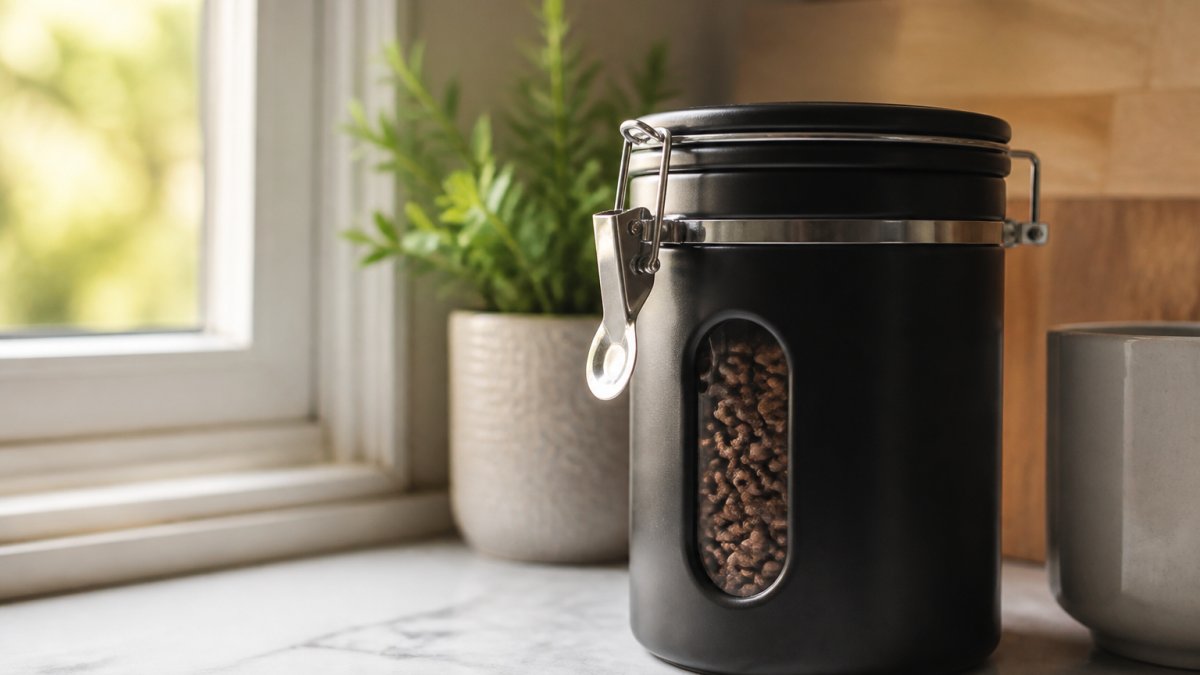
The best coffee storage container is an opaque, airtight canister with a tight seal and a one-way valve. Clear glass looks nice on the counter, but light degrades coffee. Skip it.
What to look for:
| Feature | Why It Matters |
|---|---|
| Opaque body | Blocks light that breaks down oils |
| Airtight seal | Keeps oxygen out between uses |
| One-way valve | Releases CO2 without letting air in |
| Right size | Less empty space means less trapped air |
Size matters more than people think. A huge container half-full of beans holds a lot of air. Match the container to how much coffee you actually keep on hand.
Freezing Coffee: A Safe, Repeatable Method
Freezing coffee works if you do it right. The problem is moisture. Every time you pull a bag out, condensation forms on the beans. Do that repeatedly and you ruin them. The goal is to freeze once, thaw once, and never let the beans see a temperature swing they do not need.
Here is a method that avoids the trap:
- Portion first. Divide coffee into amounts you will use in one week. A single 12-ounce bag might become two or three portions. Smaller portions mean you open the freezer less and expose fewer beans to air.
- Pack airtight. Seal each portion in a vacuum bag, a heavy-duty freezer bag with the air pressed out, or a small airtight container. Squeeze or vacuum out as much air as you can before sealing.
- Label each portion with the roast date and the date you froze it. A marker on the bag is enough.
- Freeze them all at once in a single layer so they chill quickly and evenly. Do not stack warm bags on top of each other.
- Take out one portion at a time. Leave the rest in the freezer.
- Thaw sealed, at room temperature. Let the portion come to room temperature before opening the bag. This is the step most people skip. If you open it cold, moisture from the air condenses on the beans and you get the exact staleness you were trying to prevent.
The key rule: never refreeze. Once a portion is out, keep it in your pantry and use it up. Repeated freeze-thaw cycles are what turn frozen coffee into a disappointment.
How long frozen coffee keeps
Frozen coffee does not stay perfect forever. Most practitioners find that whole beans frozen in an airtight portion hold their peak for about one to three months, and remain drinkable for longer. Ground coffee frozen the same way has a shorter window, think weeks rather than months, because it started with more exposed surface area. These are practical windows, not lab guarantees; packaging quality and how cold your freezer runs both matter.
Freezing by form
| Form | Freeze? | Best approach |
|---|---|---|
| Whole beans, unopened valve bag | Yes | Freeze the whole bag if you will not open it soon; otherwise portion it |
| Whole beans, opened bag | Yes | Portion into week-sized airtight bags before freezing |
| Ground coffee | Yes, with care | Portion small; use within weeks of thawing |
| Single-serve pods | Usually not needed | Pods are already sealed; keep them cool and dark instead |
| Brewed coffee | Not recommended | Flavor degrades fast; drink fresh or chill and use within a day |
Mistakes That Ruin Coffee Freshness (and How to Avoid Them)
Most freshness problems come from a handful of habits. Fix these and your coffee improves immediately.
- Storing in the fridge: temperature swings and food odors ruin beans
- Using a clear container: light degrades the oils
- Keeping beans near the stove: heat speeds up oxidation
- Buying too much at once: coffee past its peak cannot be saved
- Grinding days ahead: ground coffee loses aroma fast
- Leaving the bag open: air exposure is the number one enemy
The fix for most of these is simple. Buy smaller amounts, store them cool and dark, and grind just before brewing.
Conclusion: Build a Storage Routine That Keeps Coffee Fresh
Good storage comes down to a routine, not a single product. Buy small amounts. Keep them cool, dark, and sealed. Grind right before you brew.
That routine is easier when the coffee arrives fresh in the first place. Roastica roasts to order, so every bag reaches you near its peak instead of sitting on a shelf for months. Our beans come from trusted farms around the world, and our sample packs let you try several single origins before committing to a full bag.

Get started with Roastica and build a storage habit around coffee that is actually worth protecting.
Frequently Asked Questions
What is the enemy of coffee beans?
Oxygen is the main enemy of coffee beans, followed closely by light, heat, and moisture. Oxygen causes oxidation of the coffee oils, which flattens aroma and creates stale, cardboard-like flavors. Light breaks down those same oils, heat accelerates the process, and moisture introduces condensation that ruins texture and taste. Keeping beans in an opaque, airtight container in a cool, dark, dry place addresses all four at once and is the single most effective habit for preserving freshness.
Should coffee be stored in the fridge or freezer?
The refrigerator is a poor choice because coffee absorbs odors from other foods and picks up moisture every time the door opens. The freezer works well if you follow a strict method: use an airtight, opaque container, freeze in small portions you will use within a week or two, and let the container come to room temperature before opening it. This prevents condensation from forming on the beans. For daily-use coffee, a pantry shelf away from the stove is simpler and just as effective.
How long do whole coffee beans stay fresh after opening?
Whole beans stay at their best for about two to four weeks after opening when stored in an airtight container away from light and heat. After that window, they are still safe to drink but lose aroma and complexity. For longer storage, freeze portions in sealed bags and grind them straight from frozen. Buying smaller amounts more often, such as a sample pack, lets you finish each batch while it is still at peak flavor.
Does coffee need an airtight container?
Yes, an airtight container is essential because oxygen is the primary cause of staleness. A sealed bag with a one-way valve works well for short-term storage, but once you open it, transferring beans to a container with a tight gasket seal limits air exposure. Look for opaque materials like ceramic or stainless steel, and avoid clear glass jars on open shelves. If you keep coffee in its original resealable bag, press out excess air before sealing and store it in a dark cabinet.