

Why Choose Small-Batch Roasted Coffee
Table of Contents
- What Small-Batch Roasted Coffee Actually Means
- Small-Batch vs. Mass-Produced Coffee: Where the Difference Matters
- The Benefits of Small-Batch Coffee You'll Actually Taste
- How Roasters Control Time, Temperature, and Airflow
- Freshly Roasted Coffee: The Flavor and Aroma Window
- How to Store Coffee to Keep Fresh After Roasting
- Why Price Reflects Quality and Roaster Skill
- Conclusion
- Frequently Asked Questions
Last Updated: October 17, 2026
What Small-Batch Roasted Coffee Actually Means
Small-batch roasted coffee is roasted in limited quantities compared to large-scale industrial operations. At Roastica, we focus on this approach because it lets us control every variable that affects your final cup: in smaller batches, the roaster monitors time, temperature, and airflow with a precision impossible when processing hundreds of pounds at once.
The distinction matters. A small-batch roaster works with perhaps 5-25 pounds per roast cycle, while mass-produced operations handle 500+ pounds. In a small batch, every bean gets consistent heat exposure; in a large batch, beans on the perimeter experience different temperatures than those in the center, leading to uneven roasting and inconsistent flavor.
"Small-batch" isn't marketing language but a measurable operational reality. Choosing small-batch roasted coffee means choosing a process built around precision rather than volume, freshness begins during roasting, not after it.
Small-Batch vs. Mass-Produced Coffee: Where the Difference Matters
Mass-produced coffee prioritizes efficiency and shelf stability. Large facilities roast enormous quantities in a single cycle, then distribute to warehouses and retail shelves, where coffee may sit for weeks or months before reaching you, the roast date grows increasingly distant from your brew date.
Small-batch roasted coffee flips this model. Roasters prepare smaller quantities more frequently, which means coffee moves from roaster to your door in days, not months. This matters because coffee begins losing its brightest flavors and most vibrant aroma immediately after roasting.
Consider the roaster's hands-on attention. In a small-batch operation, the roaster stays present throughout the roast, watching bean color development, listening for first and second crack, and adjusting temperature and airflow in real time.
The consistency difference is significant. Small-batch roasters achieve roast-to-roast consistency by actively monitoring and adjusting, while mass producers standardize with a fixed roast profile that cannot account for batch-to-batch variation in green coffee. Single-origin beans from the same farm can vary by altitude, harvest timing, and processing method; a skilled small-batch roaster adjusts for these variables.

The Benefits of Small-Batch Coffee You'll Actually Taste
The flavor difference is immediate. Fresh-roasted coffee tastes brighter, more complex, and more distinctive, and the aroma alone, sharper, more layered, more inviting, tells you something is different. Mass-produced coffee has often lost that peak aroma window by the time it reaches you.
Small-batch roasting preserves the fullest flavor potential of the beans. When a roaster works with limited quantities, they can develop a specific roast profile tailored to that particular coffee's characteristics. A single-origin Ethiopia natural process bean needs different roast development than a washed Colombia. A small-batch roaster adjusts accordingly.

You'll notice the difference in body and mouthfeel. Small-batch coffee tends to have a cleaner, more refined cup because the roaster controlled cooling time precisely: rush the cooling and trapped heat keeps developing the roast; cool too slowly and the coffee goes flat.
The aroma window is also longer. Fresh-roasted coffee maintains peak aroma for roughly 2-3 weeks after roasting, depending on storage. Mass-produced coffee that's been in transit and storage for weeks is already past its peak when you open the bag. With small-batch roasted coffee, you're catching it during its optimal window.
How Roasters Control Time, Temperature, and Airflow
These three variables determine everything about your final cup. Time is the total roast duration, typically 8-15 minutes depending on the bean and desired roast level. Temperature is the heat applied throughout. Airflow controls how that heat circulates and how quickly moisture and gases escape.
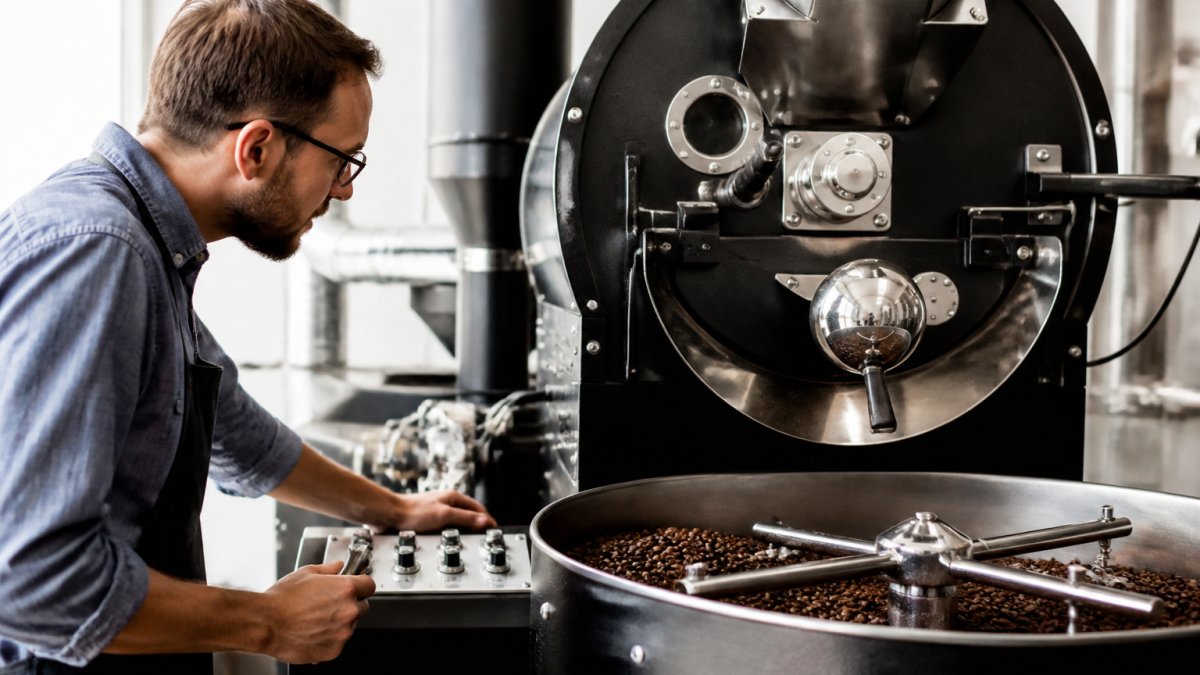
In a small-batch operation, the roaster watches bean color development continuously, green beans yellow, then brown, then darken.
Temperature control is active, not passive. Uneven color development prompts a heat adjustment; airflow that's too strong roasts beans too quickly and leaves the interior underdeveloped, while airflow that's too weak stalls the roast. The roaster responds in real time.
This hands-on monitoring distinguishes small-batch roasting from automated mass production: an automated roaster follows a preset program, while a skilled small-batch roaster responds to the beans themselves. That responsiveness is why small-batch roasted coffee from experienced roasters tastes more consistent and flavorful.
Freshly Roasted Coffee: The Flavor and Aroma Window
Freshness in coffee is measured in days, not weeks. Coffee begins releasing volatile aromatic compounds immediately after roasting, the source of its most vibrant, complex aroma, and these fragile compounds dissipate over time, especially when exposed to air, light, or heat.
The peak flavor window for freshly roasted coffee is roughly 5-14 days after roasting. During this window, the coffee has completed its initial degassing (the release of excess carbon dioxide) but retains most of its aromatic complexity.
When you buy mass-produced coffee from a grocery store, the roast date is often weeks old, or not listed at all.
Small-batch roasters ship coffee quickly because they understand this window. Roastica roasts to order, which means your coffee is roasted specifically for you, then shipped within days. You receive it near the beginning of its peak window, not at the tail end.
Single Origin Favorites Sample Pack →
Aroma depends on freshness too. Coffee that's sat for weeks has lost much of its aromatic complexity; open a bag roasted a few days ago and the aroma is vivid and layered, a preview of what you're about to taste.
How to Store Coffee to Keep Fresh After Roasting
Most storage advice skips what actually matters: matching storage to the roast date and the beans' degassing stage. A bag roasted two days ago and one roasted three weeks ago need different handling.
Start with the roast date, not the bag. The roast date tells you where the coffee sits in its freshness arc. Most small-batch roasters ship within a few days of roasting, so your bag likely arrives mid-degassing.
Match your brew method to the degassing stage. Espresso is the most sensitive.
Use the 2-3 week rule as a starting point, not a law. Once opened, aim to finish a bag within 2-3 weeks for peak flavor; after that the brightest aromatics fade, acidity softens, and the cup flattens.
Avoid the common storage mistakes. Clear containers let light degrade aromatic compounds, so choose opaque or tinted canisters.
Know when to use the beans. A simple schedule works for most drinkers: days 1-3, rest and degas; days 4-14, brew freely for peak aroma; days 15-21, finish the bag and shift to a more forgiving brew method if the cup flattens. Also check whether your roaster ships whole bean or ground, whole bean gives you grind control and preserves freshness longer, while pre-ground coffee starts losing aromatics almost immediately.
Small-batch roasting and smart storage work together: the roaster gets coffee to you near its peak, and your job is to protect that window with the right container, grind timing, and brew schedule.
Why Price Reflects Quality and Roaster Skill
Small-batch roasted coffee usually costs more than mass-produced coffee, and the honest answer is that the premium reflects a mix of real costs and real trade-offs. Understanding both helps you decide when the price is worth it and when it is not.
Where the money goes. A small-batch roaster typically pays more per pound for green coffee, sourcing in smaller lots from specific farms or cooperatives rather than commodity blends. Roasting to order means smaller runs, more frequent setup and cleanup, and less economy of scale. Skilled labor is a real cost: a roaster who reads bean color, listens for first and second crack, and adjusts heat and airflow in real time applies years of training to every batch.
The trade-offs you should expect. Higher price is the most obvious, but not the only one. Small-batch roasters often have limited availability and may sell out of a popular origin, and selection can be narrower than a mass-market brand because they focus on fewer coffees they roast well. Shipping times matter more since freshness is the whole point, two weeks in transit erodes the advantage.
How to evaluate whether a roaster earns the price. Use a short checklist before you commit:
- Roast dates on the bag. A roaster confident in freshness prints the roast date, not just a best-by date. If the date is missing or vague, ask.
- Sourcing transparency. Look for the farm, region, cooperative, or at least the country and processing method. Vague origin claims are a warning sign.
- Roast profile information. Good roasters describe the roast level and the flavor profile they were aiming for, and they can explain why a given coffee was roasted the way it was.
- Batch and packaging details. One-way valves, whole-bean options, and clear storage guidance show the roaster is thinking about what happens after the coffee leaves the roastery.
- Consistency over time. Order the same coffee twice. If the second bag tastes noticeably different with no explanation, ask why, some variation is normal in single-origin coffee, but wild swings suggest inconsistent roasting.
- Responsiveness. A roaster who answers questions about roast dates, rest times, and brew recommendations is usually a roaster who cares about the product.
When the premium is worth it, and when it is not. If you brew daily and care about flavor, freshness, and origin character, the per-cup difference is small relative to the experience. If you drink coffee occasionally, prefer dark, uniform roasts, or mainly want caffeine, a well-stored mass-market option may serve you fine. The point isn't that small-batch coffee is always better, it's that the price should buy something you can taste and verify. Use the checklist, compare a bag or two, and let your own cup decide.
Conclusion
Small-batch roasted coffee delivers superior flavor, aroma, and freshness because it's built on a fundamentally different operational model. The roaster controls time, temperature, and airflow with precision. The coffee reaches you during its peak freshness window. The roast profile is tailored to the beans' characteristics rather than applied uniformly to every batch.
The challenge isn't understanding why small-batch roasting matters, it's finding roasters who genuinely commit to the practice. Roastica roasts every order to specification, sources from trusted farms around the world, and ships quickly to preserve freshness. Experience the difference with our responsibly-sourced, small-batch roasted coffees, and taste why freshness and roaster skill transform your daily cup. Get started with Roastica and discover coffee roasted specifically for you.
Frequently Asked Questions
What does small-batch roasted coffee mean?
Small-batch roasted coffee refers to beans roasted in limited quantities, typically 5-25 kilograms per batch, allowing roasters to monitor variables like time, temperature, and airflow closely. This hands-on approach ensures consistent color development and flavor. Unlike mass-produced coffee roasted in large quantities with minimal oversight, small-batch roasting prioritizes quality control and the roaster's ability to adjust the roast profile in real time based on bean characteristics.
How is small-batch coffee different from mass-produced coffee?
Small-batch roasters control every phase of the roasting process with careful oversight, adjusting airflow and temperature as beans develop. Mass-produced roasting runs large quantities through automated systems with preset parameters, sacrificing individual attention to bean behavior. Small-batch roasting preserves the distinctive taste and aroma potential of each origin, while mass production prioritizes speed and volume, often resulting in inconsistent flavor or over-roasting to mask defects.
Does small-batch coffee taste fresher?
Yes. Small-batch roasters typically roast on-demand or in frequent small runs, meaning beans reach you days after roasting rather than weeks or months. Freshly roasted coffee retains its fullest flavor potential and aroma for 2-4 weeks if stored properly. Mass-produced coffee often sits in warehouses or on shelves, losing aromatic compounds and flavor complexity over time. The shorter time between roast date and your cup directly impacts how vibrant and satisfying your brew tastes.
How should I store freshly roasted coffee to keep it fresh?
Store beans in an airtight container away from direct sunlight, heat, and moisture at room temperature. Whole beans stay fresh for 2-4 weeks after the roast date; ground coffee loses freshness within days. Avoid the freezer unless storing for several months. Check the roast date on your package and use beans within this window for the best flavor and aroma. Roastica's on-demand roasting ensures your coffee arrives at peak freshness, so proper storage extends that quality window significantly.