

Does Fresh Roasted Coffee Taste Better? The Truth
Last Updated: October 25, 2026
Quick Summary
Fresh roasted coffee does taste better, but not on day one. The sweet spot usually arrives somewhere between a few days and a couple of weeks after the roast date, depending on the bean and how you brew it. Brewed too early, it tastes sharp and hollow.
- Most coffee tastes best between four and fourteen days after the roast date.
- Darker roasts are ready sooner, while lighter roasts need more rest time.
- Very fresh beans release carbon dioxide that pushes water away and causes uneven extraction.
- Store beans at room temperature in the original valve bag, not the fridge for daily use.
- Brew the same recipe on days three, seven and ten to find your bean's window.
Table of Contents
- Does Fresh Roasted Coffee Taste Better? What the Cup Actually Tells You
- Why Roast Date Matters More Than the Word Fresh
- Why Coffee Needs Time to Degas After Roasting
- How Long to Rest Coffee After Roasting
- Can Coffee Be Too Fresh?
- Fresh Roasted Coffee vs Old Coffee: What Changes in the Cup
- How to Store Coffee Beans to Keep Them Fresh
- How to Adjust Your Brewing as Beans Rest
- Choose Your Roast and Start Brewing at Its Best
- Frequently Asked Questions
Does Fresh Roasted Coffee Taste Better? What the Cup Actually Tells You
Here is the uncomfortable truth about fresh roasted coffee: the beans that smell most spectacular straight from the roaster often brew the most disappointing cup.
At Roastica, we roast to order precisely because timing matters more than most people realize.
So does fresh roasted coffee taste better? Yes, but not on day one.
Below, we'll show you exactly how to find that window for your own bag.
Why Roast Date Matters More Than the Word Fresh
"Fresh" on a supermarket bag means almost nothing. A roast date tells you something real.
Coffee begins losing aroma the moment roasting ends. Oxygen, light, and moisture all speed that decline.
Three things to check on any bag:
- A printed roast date, not just a best-before date
- Whole beans rather than pre-ground coffee
- A one-way valve, which lets carbon dioxide escape without letting oxygen in
What most guides miss is that roast date and bean quality are separate questions. A mediocre bean roasted yesterday still tastes mediocre. Freshness preserves quality; it does not create it.
The practical takeaway: buy from roasters who print the date, and treat that date as the clock you brew against.
Why Coffee Needs Time to Degas After Roasting
Coffee needs time to degas because roasting traps carbon dioxide inside the bean structure (Time-Resolved Gravimetric Method To Assess Degassing of Roasted Coffee). That gas escapes slowly over days and weeks, and until most of it has left, it interferes with how water reaches the coffee.
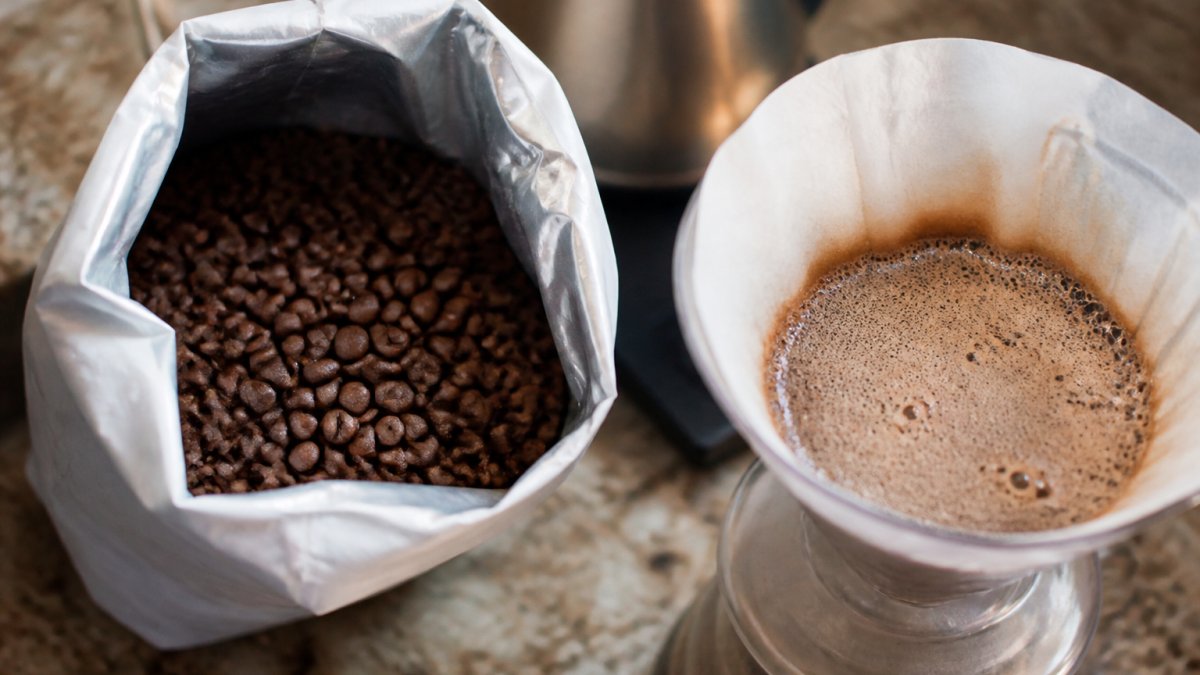
This is the part that surprises people. A bag roasted yesterday is not at its peak. It is at its most volatile.
How Carbon Dioxide Affects Brewing and Extraction
Carbon dioxide is the reason a pour-over blooms. Hot water hits the grounds, the trapped gas releases, and the bed puffs up and bubbles.
When beans are very fresh, the escaping gas pushes water away from the grounds. Water finds channels instead of an even bed.
You taste it as a cup that seems both sharp and hollow at once. The flavors feel separated rather than knit together.
For espresso, the effect is even more visible. Very fresh beans produce erratic shots that gush or stall, with crema that collapses fast.
How Long to Rest Coffee After Roasting
Most coffee tastes best somewhere between four and fourteen days after the roast date, with darker roasts ready sooner and lighter roasts needing more time. Use the shorter end for espresso and the longer end for light-roast pour-over.
That is the short answer. The longer answer depends on two variables: how dark the roast is and how you brew.
Rest Times by Roast Level and Brew Method
| Roast Level | Best For Filter | Best For Espresso | What to Expect |
|---|---|---|---|
| Light roast | 10-14 days | 12-18 days | Needs time for acidity to settle and sweetness to open |
| Medium roast | 7-10 days | 8-12 days | Balanced, forgiving window, good for most brewers |
| Medium-dark | 5-8 days | 7-10 days | Cocoa and caramel notes arrive early |
| Dark roast | 3-6 days | 5-8 days | Ready fast, fades faster, drink it sooner |
For a specific bean to test this against, our Ethiopia Natural is a medium-light roast that rewards a longer rest with milk chocolate, fruity, and caramel notes.

Two caveats. First, these are starting points, not rules; your grinder, water, and taste all shift the window. Second, the clock starts at the roast date, not the delivery date. If your beans arrive three days after roasting, you are already partway through the rest.
Can Coffee Be Too Fresh?
Yes. Coffee can absolutely be too fresh, and the signs are easy to spot once you know them.
Overly fresh coffee often tastes sharp, hollow, or oddly vegetal. It can read as sour rather than bright.
Watch out: if your pour-over drains unevenly or your espresso shots swing wildly from one to the next, the beans are usually the cause, not your technique. Give them a few more days before you change your grind.
The fix is patience, not adjustment. Seal the bag, leave it at room temperature, and try again in three days.
Single Origin Favorites Sample Pack →
Fresh Roasted Coffee vs Old Coffee: What Changes in the Cup
Fresh roasted coffee and old coffee fail in opposite directions, which makes the comparison useful.
Fresh coffee, brewed too early, tastes sharp and disjointed. Old coffee tastes flat and papery. The middle ground is where sweetness, clarity, and aroma line up.
Here is what shifts as beans age:
- Aroma: strongest in the first week, then fades steadily
- Acidity: sharp when very fresh, rounder after resting, dull when stale
- Sweetness: muted early, peaks in the sweet spot, disappears with age
- Body: can feel thin when too fresh, thin in a different way when stale
- Bitterness: rises as stale coffee is often brewed stronger to compensate
Stale coffee also loses the volatile compounds that carry flavor notes. That is why an old bag tastes like "coffee" in the generic sense and nothing more specific.
If you want a practical way to judge your own beans, our guide on how to tell if coffee beans are fresh walks through seven simple tests you can run at home.
How to Store Coffee Beans to Keep Them Fresh
Storage is where freshness either holds or collapses. The goal is simple: slow the loss of volatile compounds by limiting oxygen, moisture, light, and heat.
Start with the bag. Most specialty roasters ship whole beans in bags with a one-way valve.
Temperature and location: store at room temperature, away from the stove, window, and kettle steam.
Realistic freshness windows after opening:
- Whole beans: best within two to four weeks of the roast date for filter, and often a bit longer for darker roasts that fade faster in aroma but remain drinkable.
- Pre-ground coffee: stales far faster because more surface area meets air; aim to finish within one to two weeks of grinding, and ideally grind just before brewing.
- Espresso: beans often need a longer rest than filter, so an open bag may hit its espresso sweet spot around days eight to fourteen and then decline gradually.
Packaging caveats: a roast date is more useful than a best-before date, but it is not a guarantee.
A simple checklist:
- Keep beans in the original valve bag or an airtight, opaque canister
- Store at room temperature, not in the fridge for daily use
- Keep away from the stove, window, and kettle steam
- Grind just before brewing
- Finish an open bag within three to four weeks of the roast date
- If freezing, portion first and thaw once
For a deeper walkthrough of containers and methods, see our full guide on how to store coffee to keep them fresh.
How to Adjust Your Brewing as Beans Rest
Your recipe should change as the beans rest. This is the part most brewing guides skip, and it is where the real gains live.
A controlled way to test this yourself: brew two cups side by side, one with beans rested three days and one rested ten, using identical dose, water, temperature, and ratio. Taste both blind. Note sweetness, acidity, and finish. Repeat weekly.
What actually changes as beans degas:
- Bloom behavior: very fresh beans bloom aggressively, puffing up and bubbling as carbon dioxide escapes. As beans settle, the bloom shrinks. A longer bloom (30 to 45 seconds) for very fresh beans gives gas time to escape before the main pour; once beans settle, a shorter bloom (20 to 30 seconds) is enough.
- Grind: slightly finer as beans age and gas off, since older beans resist water less and can extract faster. If a pour-over drains too quickly on day three, do not immediately grind finer; the gas may be channeling water. Wait a few days, then adjust grind.
- Water temperature: keep it steady while you dial in grind. Changing temperature and grind together makes it impossible to know which variable caused the shift. Most practitioners find that a stable temperature around 92 to 96°C (198 to 205°F) works across rest stages for filter.
- Ratio: leave it alone while you dial in grind. Dose and ratio are your constants; grind and bloom are your variables during the rest window.
- Espresso: very fresh beans produce erratic shots that gush or stall, with crema that collapses fast. Let espresso beans rest longer than filter beans, and expect to adjust grind finer as they age. If shots swing wildly from one to the next, the beans are usually the cause, not your technique.
A practical sequence for a new bag: brew on day three, note the bloom size and drain time, then brew again on day seven and day ten with the same recipe. If the cup tastes sharp and hollow, give it more days. If it tastes flat, check whether the beans are past their window. Adjust grind only after you have tasted the same recipe across at least two rest stages.
If you want bean recommendations matched to each rest stage, our guide on the best coffee beans for home brewing pairs styles with brewing methods.
Choose Your Roast and Start Brewing at Its Best
The honest answer to whether fresh roasted coffee tastes better is this: freshness is necessary but not sufficient. You need a recent roast date, enough rest, and beans worth resting in the first place.
That is the standard we build around. Every Roastica batch is roasted to order, sourced from trusted farms and cooperatives, and shipped fast so the clock starts working for you rather than against you.
Not sure where to begin? The Best Sellers Sample Pack gives you six 2oz packs across dark, medium, and single-origin roasts so you can taste how rest time changes each one.

Frequently Asked Questions
Does fresh roasted coffee taste better right after roasting?
Not immediately. Fresh roasted coffee is at its most aromatic within the first day or two, but brewing it that soon often produces uneven extraction. Carbon dioxide still escaping from the beans disrupts water contact with the grounds, so you get sour or muddled notes. Most beans taste their best somewhere between 4 and 14 days after the roast date, depending on roast level and brew method.
How long should coffee rest after roasting before brewing?
For pour-over and drip, 5 to 10 days after roasting is a solid starting point. Espresso usually needs 7 to 14 days because the pressure amplifies any residual gas. Dark roasts degas faster and can be brewed sooner, while light roasts often need the longer end of the range. If your cup tastes sharp or foamy, give the beans another few days.
Can coffee be too fresh to brew?
Yes. Overly fresh coffee, especially within 24 to 48 hours of roasting, releases carbon dioxide so quickly that water channels through the grounds unevenly. The result is a cup that tastes sour, vegetal or thin. Letting the beans rest lets that gas escape and makes extraction more predictable. It is not a defect in the coffee, just a timing issue.
How do you store coffee beans to keep them fresh?
Keep whole beans in an airtight, opaque container at room temperature, away from light, heat and moisture. Buy in amounts you will finish within 2 to 4 weeks of opening. Do not store beans in the fridge, where condensation and food odors creep in. Freezing works for longer storage if the bag is sealed and you grind straight from frozen.
Ready to taste the difference timing makes? Get started with Roastica and brew every bag at its peak, with responsibly sourced beans roasted to order and delivered to your door.
